

Andrew Curry writes: For the third part of our series looking at the nine records shortlisted for the 2025 Folk Album of the Year, we have been listening to Peggy Seeger, Joshua Burnside, and Edith WeUtonga. The winner will be chosen at a ceremony in Rochdale, Britain’s 2026 Capital of Culture. The first part of the series can be read here, and the second part here.
Teleology, by Peggy Seeger
Peggy Seeger turned 90 this year, and she says in the liner notes that Teleology is her final record in a music career that goes back 70 years. It is a family affair. Her son Calum MacColl produced the record; Calum and his brother Neil each co-wrote several songs, played a range of instruments, and contributed backing vocals; their sister Kitty did the sleeve design; and daughter-in-law Kate St John played the accordion on some tracks and a haunting cor anglais solo on the final track, Apple Tree.
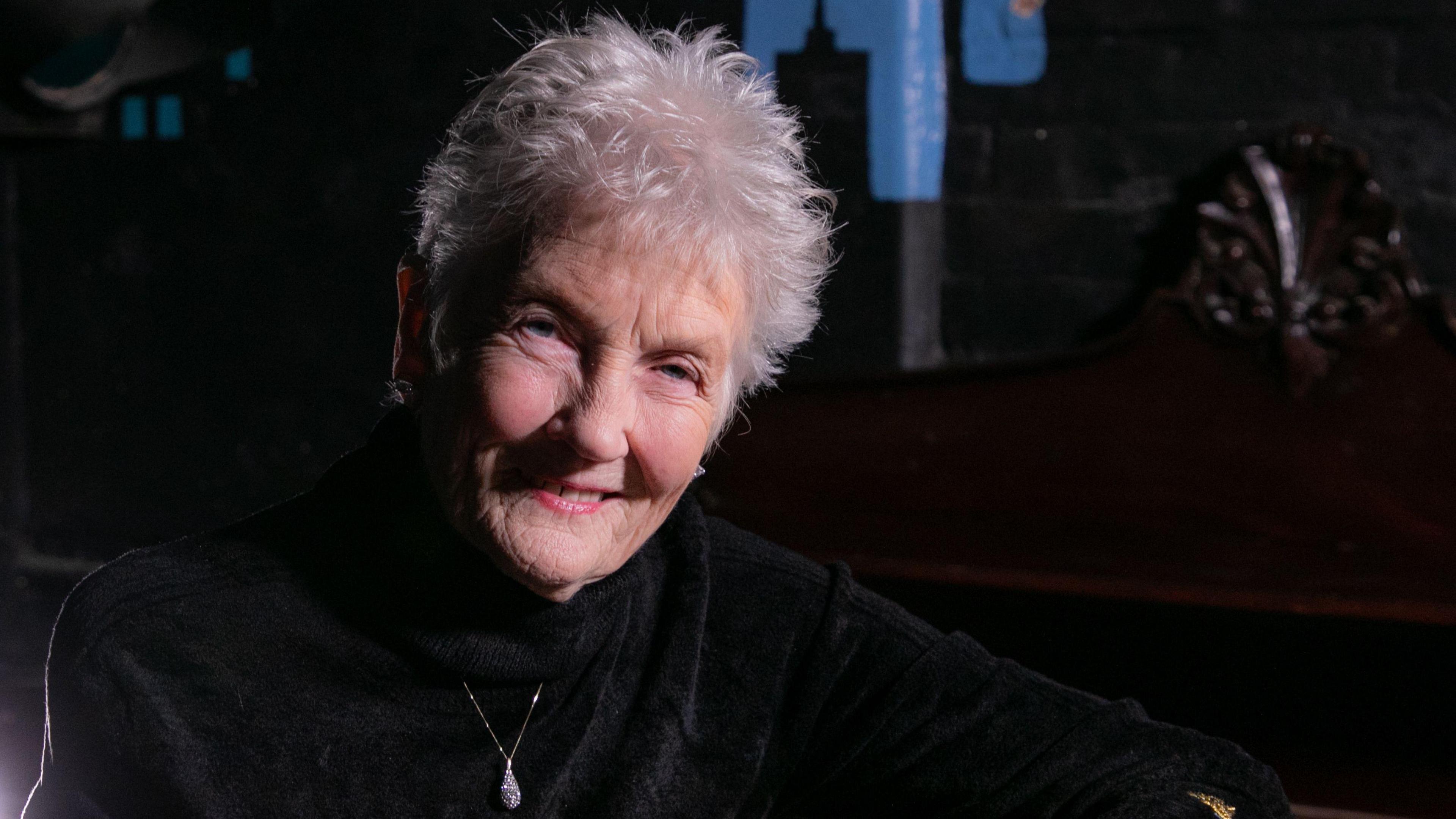
Although Peggy Seeger is a national treasure, at least in folk music circles, I’ve never really been a fan. I’m not fond of her singing voice, and some of her political songs are a bit “on the nose” for me. When I saw Teleology on the shortlist for the Folk Album of the Year, the sceptic in me wondered if the judges had included it for sentimental reasons. But it’s mostly a fine record by which to sign off Seeger’s long career; it’s here on merit.
All the same, her strengths and weaknesses are on display here. The very first song, Sing About These Hard Times, is a perfect example of the “on the nose” political songs I mentioned earlier, and also pretty dirge-like, and since she has a few tracks later updated Maurice Sugar’s 1930s protest song Sit Down, to much better effect (and with a much more singable chorus), I’d have been inclined to leave Hard Times off the record.
In sharp contrast the second song, I’d Like To meet Paul Simon, co-written with Calum, is witty and lively as it plays games with Simon’s lyrics and song titles. As far as I can judge, it is a genuine ambition: they seem to have missed each other when Simon was paying his dues in the ‘60s on the British folk club circuit.
There are well-crafted and subtle songs later on about the experience of being a refugee and of being homeless. And some, too, about growing old. Teleology also includes a version of The First Time Ever I Saw Your Face, written for Peggy Seeger by Ewan MacColl. It has a distinctive piano accompaniment played by Seeger, and if you’d had a song as beautiful as this written about you, you would certainly want to include it on your farewell record. And whatever my reservations about Seeger, I’m pleased that she has been able to end a distinguished career as a radical folksinger on her own terms.
Here’s I Want to Meet Paul Simon:
Matthew Bannister interviewed Seeger for Folk on Foot:
https://overcast.fm/+AAOAK1VlbXU
Teeth of Time, by Joshua Burnside
Joshua Burnside is based in Belfast, where he was raised, and Teeth of Time is his fifth studio album: there’s a live recording as well. His songs include found sounds and bits of electronica, as well as his own playing and vocals. Teeth of Time, the opening track on the record, includes an in-your-face radio commercial for airbeds.
He’s clearly interested in sound as much as song, and references the frankly obscure US-Dutch duo The Books as an influence. In an interview with KLOFmag he talks about starting a track with a fragment of sound and seeing where it takes him to, rather than the typical verse-chorus-verse structure. This extends to the recording, in an un-soundproofed studio in Belfast. Reviewers who have listened to Teeth of Time in better quality than I have say you can hear some of the street sounds at the edges of the mix.
This makes the music sound like a much harder listen than it actually is. In the KLOF interview he distances himself a bit from the ‘folk’ label, preferring to describe his recent work as more influenced by Americana and indie-folk. He also references the singer Elliott Smith as an influence. But for all of that, this still sounds like music that has a home in the north of Ireland. As with several of the other shortlisted records, the Teeth of Time has a strong sense of a place being explored through music.
There’s also something quite compelling about the story-telling in these songs, as in The Good Life, which references his recently born son and the experience of driving around with him in the back of the car to try to get him to sleep. Many of us know what that feels like, and maybe also suggests a layer of irony wrapped in the title.
Here’s his song The Good Life:
And here’s the Folk on Foot interview with Joshua Burnside:
https://overcast.fm/+AAOAK0gRaSg
Varipasi, by Edith WeUtonga

Edith WeUtonga is the stage name of the Zimbabwean bassist and singer Edith Katiji, brought up in Zimbabwe but living in Britain for the past six years. her record Varipasi is her fourth record overall, but her first since she came to Britain in 2019, initially to study.
It’s definitely not a folk record, but despite the title of the awards (Folk Album of the Year), it’s designed to “celebrate the most artistically acclaimed folk, roots and acoustic albums in Britain and Ireland”. So Varipasi is definitely at the roots end of the spectrum. And I think this is welcome, just because of the variety it offers, and because some of the best times of my record-buying life were spent browsing in Stern’s Africa Music Shop off Charlotte Street in the 1980s.
Like much African music, it has an infectious rhythm and a terrific energy to it, such that I was later surprised to discover that the inspiration behind Varipasi was to pay tribute to her grandmother, who died during the pandemic. Edith WeUtonga worked closely with the One World Orchestra UK, a London‑based cross‑cultural ensemble that Edith WeUtonga is a member of. The orchestra has a mission to “to create a new, multi-cultural sound for 21st century UK”, which fits with her sound, which combines elements of Zimbabwean musics such as Jiti, Chimurenga and Shona with folk, jazz and world music.
And despite the subject matter, looking across all the nine records, only Varipasi and Gigspanner Big Band’s Turnstone can really be described as upbeat.
We like to link to the artist’s youtube page at Salut Folk! because it means that they should get some pennies when the video is watched, but I couldn’t find any of the tracks on Varipasi on youtube, or on Bandcamp. (It can be bought via iTunes). So here instead is a link to the record on Spotify, where unfortunately, she will get no benefit beyond a small amount of visibility:
This is Matthew Bannister’s interview with Edith WeUtonga for Folk on Foot:
https://overcast.fm/+AAOAK3Fv054
Listening to all of these records for this short series has been a pleasure and has introduced me to performers I feel I ought to have known about but didn’t. But one request to the organisers—take a leaf out of the Mercury Music Prize playbook, and make it Folk Albums of the Year, plural. I know these competitions need to have a winner, but these are all fine records, and only one of them can win.
—
Do join the Salut! Folk Facebook group at https://www.facebook.com/groups/2902595146676633/. You’ll get there immediately if you’re already on Facebook.
—
Leave a Reply