
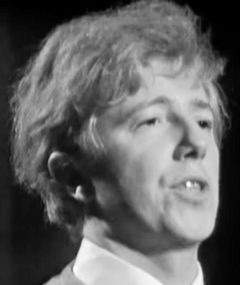
Colin Randall writes: news of the death of the great Geordie singer Bob Davenport reached me during a punishing 1,400km trek from the shores of the Mediterranean to the grey skies of London. He was 94 and had lived an extraordinarily full life, but his passing was still a source of sadness.
Dave Arthur’s eloquent and moving tribute at Facebook speaks for itself and he kindly permits Salut! Folk to reproduce his words.
The sheer power of Bob’s voice stunned audiences. But let us turn to Dave for a fascinating resume of a long life well lived …

).
BOB DAVENPORT (1932-2026)
So, Bob Davenport has left the stage after a ninety-four year run. I first met Bob at the Unity Theatre in the 1960s.
As a young-post-skiffler with a Ramblin’ Jack Elliott fetish I used to lug my guitar up to the Unity midweek folk sessions. One evening, after an assortment of Irish rebel songs from Nigel Denver, and dulcimer tunes and Anglo-American ballads from Carolyn Hester and Dick Farina, a slight, red-haired figure, dressed casually in a crew-neck sweater and slacks, slowly wandered down the darkened centre aisle and started to sing: ‘With our nets and gear we’re faring, On the wild and wasteful ocean….’
The voice filled the theatre, and made the hair on the back of my neck stand up. Wow! When he got to the front he ignored the stage, turned and faced the audience, thrust his hands deep into his pockets, threw back his head and finished off an ear-splitting rendition of The Shoals of Herring.
Since then, over the years, I got to know him well; the anarchic fifth columnist of the folk revival. His outspoken views and opinions on the cant, hypocrisy and ignorance of many of the revival’s leading figures and pundits made him less than popular in some quarters, and a hero and an enormously influential figure in others.
Bob, born in Gateshead, was brought up in a traditional North East community where he was exposed to a variety of social musics, from family songs such as The Herrin’s Head, Wor Nanny’s a Maisor’ and Bonny Boy a Growing to 78s of Bunk Johnson and George Lewis – brought to Newcastle from the United States by returning Geordie sailors, and sold in a specialist shop off the Big Market.
He also went along with the lads to Sunday night concerts at the Newcastle Odeon to listen to bands such as Harry Parry or Harry Gold and his Pieces of Eight.
In a more folky vein were the miners’ welfare dances where small local bands hammered out eightsome reels, The Gay Gardons‘ and Strip the Willow – all of which were done to traditional stepping. He also bopped to modern jazz.
It was this catholic musical upbringing that later helped him to enjoy and understand such seemingly diverse musics as reggae, pink, Irish dance music, Cotswold Morris, hip hop, New Orleans jazz, West African drumming and Scottish ballads, and to see it for what it was – the natural musical expression of working people everywhere; social, toe-tapping music that establishes yet transcends cultural and social identity. Music to strike a chord in the universal heart.
When Bob finished his National Service stint in the RAF he came to London to study at St Martin’s School of Art. He felt like a fox in a henhouse with so many choices to make – bookshops, theatres, ‘foreign’ films, museums, and, of course, pubs and music.
He was early in finding the Irish pubs in and around Camden Town in which rough-looking men with fingers are big as pork sausages came in from the building sites, picked up their fiddles and produced music sweet enough to pull the stars down from the sky.
When Bob first got involved with the London folk scene, the thing that struck him was the difference between folk clubs and the Irish pubs that he frequented. In the pubs the music was just a normal part of the proceedings, people didn’t analyse what was going on. It was as natural to them as drinking a pint of Guinness or going to the lavatory.
Whereas some folk clubs, particularly the leftwing set-ups inspired by Ewan MacColl and Bert Lloyd were more didactic affairs where you went to ‘learn’ and to be lectured at; Bob felt they were as much evening classes as social occasions.
Of course, not all clubs were like that, but the early skiffle and post-skiffle days where every one played whatever they enjoyed, when audiences and club organisers were very catholic in their choice of residents and guests, did begin to divide into various musical camps, many influenced by Ewan and Bert and others of the left.
For Bob traditional music didn’t need reviving, it was very much alive, and living, in the playground, the pub, the street, and at the football match, and folk music was what people played who believed it to be dead. A subtle difference. He felt that many audiences and ‘experts’ in the 70s and 80s spent so much of their time analysing and dissecting the music that they missed the point of it. He likened some aspects of the folk scene to that of traction engine enthusiasts who no longer use the machines for threshing or whatever, but paint them up and take them along to traction engine shows. They cease to be a functional thing and become, instead, an art object.
Similarly, according to Bob, when songs and tunes are divorced from their natural social setting, and introduced as ‘such and such a version’, they become ‘art objects’ that take on art status, and all that implies in terms of money value and exploitation.
It was this belief in the social importance and value of song, music and dance that Bob, along with Reg Hall and the Rakes, and people like Roger Digby, put into practice at such justifiably famous clubs as The Fox, the Florence and the Empress. As he saw them, havens of traditional music in a sea of folk revival group therapy, or political indoctrination classes.
For all of his singing and club organising, he believed that traditionally Saturday night was for a good time and not for education. In Bob’s ideal pub club Bampton Morris, Bolden Banjos, a Nigerian Band, country and western, the Elliots of Birtley or the Stewart family from Blairgowrie were all welcome to come and join the party.
This was not everyone’s idea of folk clubs, which is why Bob was not universally popular, especially when back in the 1980s he said things like: ‘It’s not that I am anti-intellectual in general. I just don’t think we’ve got any intellectuals within the folk revival. We are merely clever and sometimes scholarly, but not intellectuals.’
In 1966, inveterate iconoclast Bob, once went head-to-head with Ewan and Bert at a public debate in Soho’s John Snow pub, where he accused them of intellectual appropriation and misunderstandings, or ignorance, of the true nature of traditional music. Regardless of which team you rooted for, the event was declared a draw, to be continued at a later date.
Along with his strongly held, and frequently publicly aired, opinions, Bob had a good sense of humour and was as funny as he was serious. A good friend to many, many, people.
The folk world has changed a lot since Bob was actively involved, but on the various social platforms, especially Facebook, people are still arguing about what folk music actually is, how it should be performed, and its relevance in 2026. Is it (whatever the IT is) something special, and easily recognised and catalogued, or is it whatever managers, agents, radio presenters, bloggers, TV producers, researchers, academics, performers, audiences, and club and festival bookers tell us it is?
So, Bob has left the stage, but the play goes on, and on, and on……
One of my fondest memories of Bob is the time Bob and his wife Tarby; American singer Bill Clifton and his wife, biodynamic farmers and singers Jimmy and Pauline Anderson and Toni and myself all decided to have some of our dozen or so kids baptised at the same time.
There might have been a baby involved, I can’t remember. Toni and I had never bothered before and our son Jonathan was around five or six, as were most of the other children.
But at the time it seemed a fun thing to do. Hedy West, the wonderful Appalachian ballad singer, offered to come and take photographs. She managed to climb up onto the large stone font and photographed down onto the children’s faces, as the poor vicar struggled to lift them up to anoint them, or whatever one does at baptisms.
The tiny Sevenoaks church was full of children. One of whom broke her bead necklace, scattering and clattering large beads all over the church floor. I have a great photograph of us singers and a tribe of kids lined up outside the church following the ceremony. The vicar, who was a bluegrass fan, joined us at the Clifton’s nearby farm for an afternoon and evening of food, music and dancing. A truly memorable social event in the Bob Davenport mould.
Additional notes;
* that strong, distinctive voice rings in the ears still, as the author Ken Hunt noted at Facebook. I encountered it at same Darlington folk club where I also marvelled, on another occasion, to the superb and – as I recall – sensual duo that was Dave and Toni Arthur (Toni, who was then Dave’s wife, would go on to become a successful children’s TV presenter and theatre director).
** Bob Davenport was distantly related to the Geordie singer and music hall songwriter George Ridley, composer of The Blaydon Races.
*** his early life was scarred by tragedy. When he was just 10 months’ old, a gas explosion at his home killed his 23-year-old father and grandfather.
**** The Northumbrian piper and broadcaster Kathryn Tickell posted this heartfelt tribute
Devastated to hear that my friend Bob Davenport has died. What a singer. What a force of nature. I love this poem that was written for him by Paul Durcan. I’m in London at the moment and was going to visit him tomorrow (Monday) I was going to go on Friday but Monday was easier…he died Friday night. Please…go and see your loved ones, don’t wait until it’s convenient….💔


***** Please visit our Facebook group at
https://www.facebook.com/groups/2902595146676633
Leave a Reply