
It’s time for our summer edition of ‘Something Old, Something New, in which we ask the Salut! editorial team what they have been listening to so far this year. Today we’re looking at ‘Something Old’, where we look at what we’ve been listening to from our back catalogues.
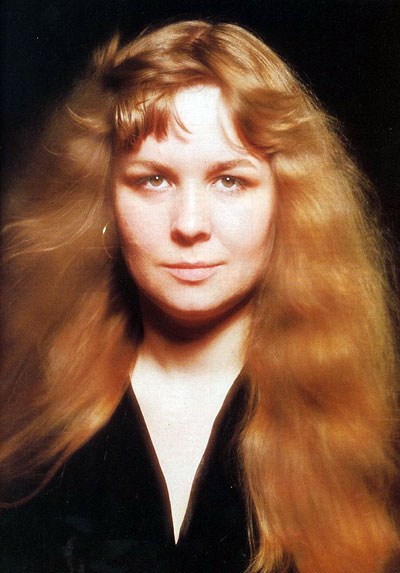
(Sandy Denny, as photographed by David Bailey, via the official Sandy Denny site)
Andrew Curry writes: I stumbled across A Tree With Roots, by Fairport Convention, which is a compilation of mostly Dylan covers, by different iterations of the band. It includes some solo Sandy Denny tracks, and one by Fotheringay. My introduction to Fairport was “Babbacombe” Lee, because someone I knew was selling it cheap and I liked the idea of a concept album about a man who escaped hanging.
From “Babbacombe” Lee I slowly worked my way backwards through Fairport’s back catalogue at about the same time as I was discovering Dylan’s ‘60s songs, so Sandy Denny’s French translation of If You Gotta Go, Go Now, on Unhalfbricking, brought a smile to my face. As it happens, Si Tu Dois Partir opens A Tree With Roots, which takes its name from a Dylan compilation.
There’s a lot of music on here, and Fairport and Sandy Denny had an aptitude for Dylan. I might have skipped the live 1975 version of All Along The Watchtower, which adds nothing to the original and sounds as if it was recorded through soup. Some of the live recordings on here were recorded for BBC sessions. The live version on here of Percy’s Song, recorded for John Peel’s Top Gear, is far better than Dylan’s version. Knockin’ On Heaven’s Door, recorded at the Troubadour in LA in 1974, is far better than Clapton’s cover. Every time you hear Sandy Denny sing these songs, you wish she hadn’t died at 31.
Seeing Mary Black, in Killarney, in May, on her farewell tour has been one of my highlights of the year so far, and I have been enjoying her catalogue since then. Mary Black Sings Jimmy McCarthy, which is just songs by one of Ireland’s most accomplished songwriters, has become a particular favourite.
Visiting a music shop earlier this year in Espelette, a small town in the French Basque region, the woman behind the counter—who had ended up here from French-speaking Canada—described Benito Lertxundi as “the godfather of Basque music”. I once had tickets to see him play in Pau, but he cancelled for health reasons. His 40th anniversary live album is a compelling reminder of what we missed.
Steve Peck writes: Spinning songs from yesteryear is a favorite pastime of mine. However, to avoid hearing the same-old, same-old, I love seeking out obscurities that stand side by side with their more famous siblings.
Jethro Tull was my initial gateway into British folk-rock long before I really dived into the genre. By 1979, they seemed like dinosaurs amid the punk and new wave scenes. _Stormwatch, _their album from that year, slipped out largely unnoticed, even among ardent Tull fans. Too bad. People really missed out on a superb, dark, and edgy record.
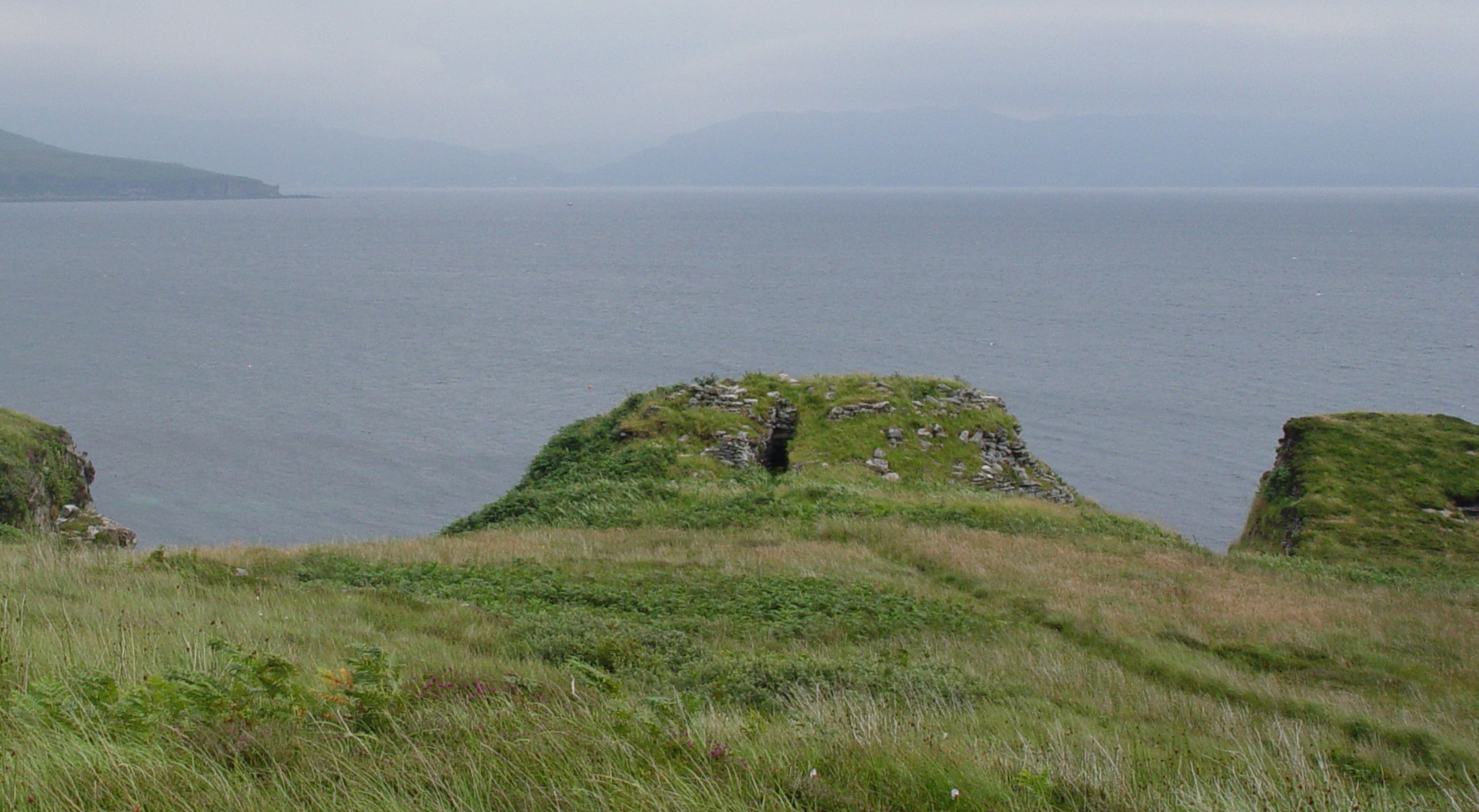
Dun Ringill, one of Tull’s purest folk recordings, qualifies as a lost classic. Written about the Iron Age fortress on the coast of the Isle of Skye in Scotland, it’s a solo Ian Anderson acoustic piece with eerie sound effects and voiceover. Deeply mysterious, it feels like an ancient northern tale whispered among the heavy stones.
When one thinks of the Strawbs, Dave Cousins and Rick Wakeman are usually the first names that come to mind. However, other band members made significant contributions. Tony Hooper was there from the very beginning, when the fledgling group featured Sandy Denny as its primary vocalist. Hooper would occasionally take the lead spot, and whenever he sang, it would touch something deep in my soul.
The Flower and the Young Man is one such example. Appearing on their _Grave New World _record from 1972, it’s a touching Cousins number in which Hooper delivers one of his quietly affecting performances. Keyboardist Blue Weaver adds dramatic clavioline, an instrument that was an early predecessor to the synthesizer.
From across the pond comes One More Sign by Neil Young, a rare gem known only to his most devoted fans. Recorded in 1967 as a solo demo for the Buffalo Springfield, it finally saw release in 2001 on their box set. It’s Young at his most vulnerable, a young man still learning to understand his emotions. It also features one of the most exquisite melodies he ever wrote. Never an easy guy to figure out, it’s a real head-scratcher why he never released One More Sign, although he returned to it several times in the studio. An extremely prolific writer, Young has a trove of buried treasures, the kind of material many artists would give their eyeteeth for.
Colin Randall writes: Older rather than old, the American singer-songwriter Steve Earle, a familiar face and voice in Ireland, wrote and sang Galway Girl long before Ed Sheeran came up with his quite decent, though not as good, song of the same name.
Unlike Galway Girl, Earle did not write The Galway Shawl. It is a traditional song first collected in Dungiven in 1936. Bob Fox included a fine version in his Dreams Never Leave You album in 2000 and many other artists have had a shot.
What makes Earle’s interpretation from a few years ago more special is the musicianship of Dervish, among the best of Irish traditional bands, and above all the soaring harmony vocals of Cathy Jordan in each chorus. A jolly session turns into recording perfection.
And see also my Cover Story article on Galway Girl.
From 1978, the Albion Band’s fondly remembered album Rise Up Like the Sun, a priceless example of the momentous contributions to folk and folk-rock made by Ashley Hutchings, now recovering from a stroke. John Tams’s powerful vocals tell of a dreadful mining explosion near Wrexham that killed 261 men.
The bleak lyrics and hymnal tune keep us occupied for more than 10 minutes. It was not the best received track on an otherwise acclaimed album, with the ultimate folk-rock guru Joe Boyd as co-producer. But I believe it to be a classic of its genre, best described as songs commemorating the true price of coal.
(And see also my piece on Salut Folk! on how songs about coalmining have enriched folk music.)
Like Andrew, I have also been listening to Fairport Convention. I Still Miss Someone, recorded for a BBC session, was the kind of early Fairport that persuaded Joe Boyd the band could play American music as well as British folk and folk-rock. And country – I Still Miss Someone was a Johnny Cash classic, co-written with his cousin Roy Cash Jr in 1958 and initially no more than the B-side of a single.
Fairport’s sparkling version came 10 years later, on the Heyday album that still gives much enjoyment nearly 60 years later. Sandy Denny’s irresistible vocals and an infectious arrangement make the song the band’s own despite many excellent covers.
—
The featured image, of Dun Ringill on the Isle of Skye, is by Bryan Mackinnon. Public Domain, via Wikipedia.
Do join our Salut! Folk Facebook group at https://www.facebook.com/groups/2902595146676633/. You’ll go straight there if you’re already on Facebook.
Leave a Reply