
Andrew Curry writes: There’s not been that much released in the way of Nick Drake’s music beyond the three records that he released before he died in 1974, so the arrival of The Making of Five Leaves Left, a collection of three albums-worth of material recorded in different places before he recorded Five Leaves Left in 1969, is a genuine surprise.
It shows both his precocious talent and his youthful evolution as the music on Five Leaves Left developed, and perhaps also the way that Joe Boyd and John Wood nurtured Drake’s development.
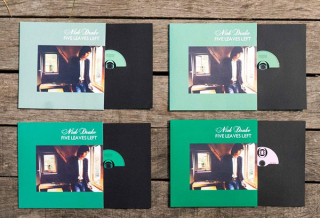
(Photo: Universal Music)
The release has been authorised by Drake’s estate and his elder sister Gabrielle, who has acted as a kind of musical executor for Nick over these past years. The accompanying booklet has been assembled by the music archivist Neil Storey, who did much of the tape research, with Drake’s most recent biographer, Richard Morton Jack. It has been mastered by John Wood, the engineer/ producer who worked with Drake on all three of his records and who became a friend. And maybe it’s appropriate that it’s Wood’s voice that we hear on here first.
And there’s a lot here. The project started with a tape of the Drake’s first demo recordings at Wood’s Sound Techniques Studios, preserved by Beverley Martyn (another friend, along with her then husband John), in March 1968, and helped along by finding a tape recorded in a Cambridge University room around a month earlier by another undergraduate Paul de Rivaz. Neil Storey found more material in the Island archives. So although there are three records worth of takes and out-takes here (the fourth record is the version of Five Leaves Left that was released), this stuff isn’t being stretched thin. The recordings give us a genuine insight into Drake’s emergence as a performer.
As Ray Honeybourne said in a review at The Line of Best Fit,
what is presented has been judiciously selected and respectful of the artist, and shows both development and, in places, roads that could have been, but were not, taken.
Drake was 19 when he recorded the material at Cambridge in the spring term of 1968. But he doesn’t sound like a 19-year old. He’s already a hugely accomplished songwriter and guitarist, even as he plays a set of songs into a friend’s tape recorder. Among these songs are already complete versions of Time Has Told Me and Day is Done, which were on Five Leaves Left, as well as Made to Love Magic, released some time after his death.
The Sound Techniques demo session was just a month or so later, in March ‘68, and he’s still in his teens at this point, and he sounds even more assured, almost a creature of the studio.
One of the other intriguing elements in the Cambridge recordings is listening to Drake, still a university undergraduate, explaining (I assume to Paul de Rivaz) how he imagines the accompaniment for some of the songs might go. (Was this planning for a gig that didn’t happen?) In My Love Left With The Rain, which I don’t think has been released before, he explains that he’s written it for a flute to come in, and a bass.
Similarly, in Cambridge he describes Day is Done as ‘a string quartet’ song, and elsewhere we hear the emerging versions of the song before it ends up on Five Leaves Left, with Robert Kirby’s string arrangement on it.
That was interesting to me because one of the Nick Drake myths is that he wanted his songs to be pure but his producer Joe Boyd slathered them with arrangements. There’s a reason for this: as Drake’s depression got worse, he told Boyd that he wanted to record just with guitar. His last record, Pink Moon, was a solo record, produced and engineered by John Wood. Boyd didn’t think it a good idea, but acknowledges that it is Drake’s biggest selling record.
Working through the songs, which can be found online if you don’t want to buy the four record set (the vinyl version has already sold out), it is possible to trace the evolution of some of his best loved songs. Strange Face, for example, slowly transforms itself into the ‘Cello Song.
Because I was writing here about Pentangle last week, I thought that I detected some Pentangle influence on some of the early Cambridge songs that weren’t recorded for the LP. If so he must have seen them live, since The Pentangle wasn’t released for another three months. But Mickey’s Tune is crying out for a Jacqui McShee vocal.
Five Leaves Left didn’t come out until the middle of 1969, by which time Drake had just turned 21.
At the time it got a mixed reception, which reminds us, mostly, that music critics aren’t always very good at hearing new sounds. (The NME compared him unfavourably with Peter Sarstedt, now remembered only as a one-hit wonder). Of course, it’s now regarded as an exceptional first record, and one of the insights from The Making Of is how much work went into that.
Listening to Gabrielle Drake being interviewed on Radio 6’s New Album Fix, one of the tracks on The Making Of that she selected to play was Mayfair, which didn’t make it onto Five Leaves Left. She said it was her favourite Nick Drake song. Listening to it here, you can see why: it’s bitter-sweet, sardonic, evocative. And frankly, Five Leaves Left would have been a better record if they’d scrubbed the frankly irritating Man in a Shed and dropped Mayfair in in its place.
More on Nick Drake on Salut! Folk:
Leave a Reply