
September 2021 non-update: nothing more to say. I just fancied resurrecting this old piece from the voluminous Salut! Live archives …
The stories of Del Shannon, Runaway and – no point being modest – Salut! Live come together in a strange way.
As a young lad trying to avoid such meaningful activity as homework, I regarded the arrival on Radio Luxembourg of this big hit from the States as a significant event.
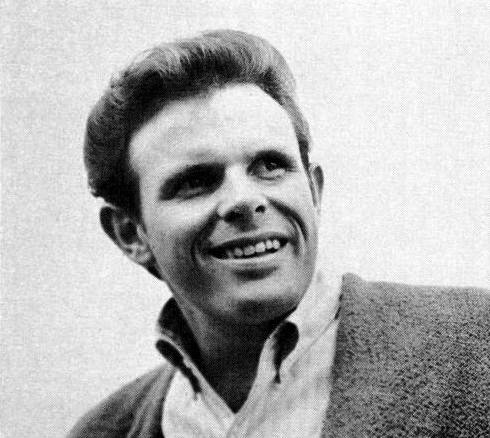 Image: Amy Records. Public Domain
It was as good a single as I remember from the year, and I briefly wanted to be Del Shannon. Later that year, or maybe the next, I was in Blackpool on a family trip. The amusement arcades had make-your-own record booths and in I went to give Runaway my best shot.
Anyone in earshot probably ran away too. The Del Shannon falsetto was beyond me by some margin.
Still I had my record and would play it every so often; it made me wince to hear it, and if I am honest the effect was hardly less demoralising in the bits between the falsetto lines.
I could not even put it down to poor studio facilities since the combined powers of Phil Spector, Mickie Most and Joe Boyd would have been insufficient to make me sound other than excruciatingly bad.
This version, slower than the original, was suggested. by Eileen Jennifer, who administrates the 60s 70s Folk Music Facebook group, where I had readily admitted that Runaway was neither folk nor folk-rock.
Del, who began life as Charles Weedon Westove, was wholly unaware of this cover version. His visit to my home town of Shildon, Co Durham some years later, his career by then in sharp decline, was not a desperate attempt to track down any missing royalties (I credited his keyboard player Max Crook, as co-writer of Runaway but see Lawrence's detailed observations in Comments below).
He was there to play one of the workingmen's clubs. This, in a piece at Salut! Live from many years ago, is how I described the unfortunate prelude to Del's big night:
Del Shannon's encounter with the admirable but sometimes unbending nature of the workingmen's club movement – I speak with affection since my late father was a long-serving club secretary, also in Shildon – actually made the national press.
The Daily Mirror, possibly only in its northern editions, ran the story of the great man's arrival at the front door as that night's star turn. "Where are your club cards?" growled the steward on duty at the entrance. "But I'm the artist who's appearing here tonight," Del protested, perhaps struggling to suppress that famous falsetto. The steward was not impressed. "Aye," he said, "they all say that. As far as I am concerned, if you're not a member or an affiliate, you're not getting in unless someones signs you in."
Now I know that Del, no longer with us of course, could not have produced club cards. I also know that he went on to perform that night, so either the man on the door was overruled in the nick of time, or he was finally persuaded that Del's accent was not that of a Durham railwayman trying to sound American.
It occurs to me that having missed the show, probably because I was by then living far away, I never asked anyone how the falsetto seemed to be bearing up to the passing of years.
Del shot himself during a bout of depression in 1990, aged 55. It is a huge shame that his life ended that way, and indeed that his career had hit the rocks more or less when he was hitting the bottle, though he was talented enough to enjoy the occasional resurgence. He was a very good American pop singer, and Runaway was a great song of its time.


Leave a Reply